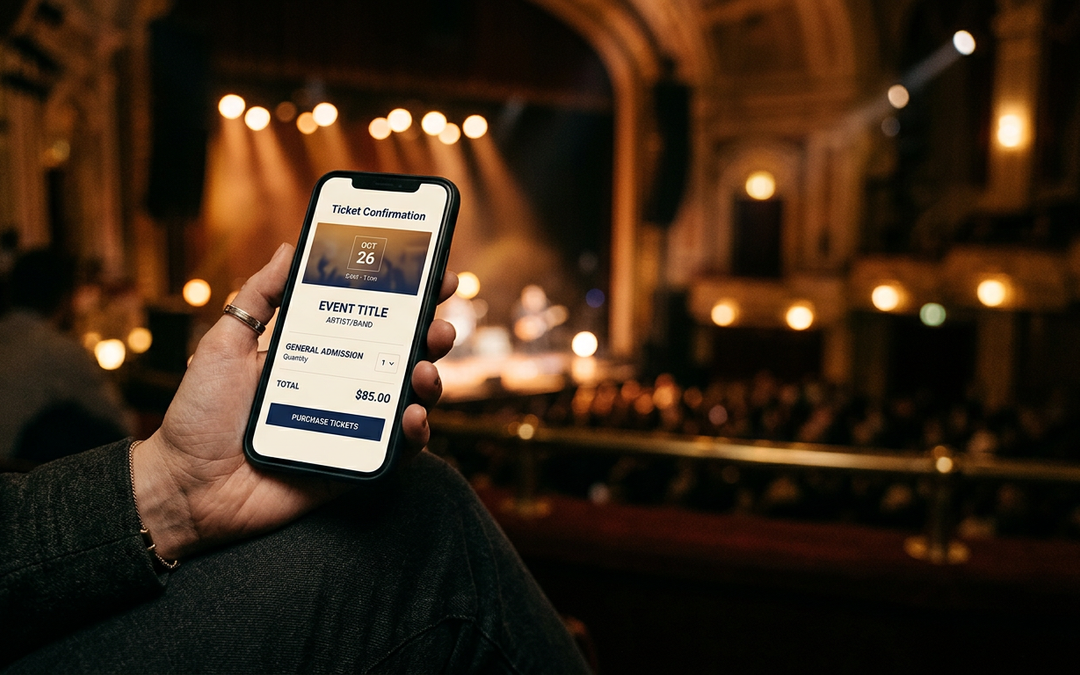


Doors open in thirty minutes, the line is already down the block, and some patrons are holding tickets bought through three different channels. Access control is everything that happens between the line and the seat: checking tickets, spotting fakes, keeping people moving, and knowing who is in the building. Done well, nobody notices it. Done badly, it is the part of the night people remember.
Here is what good access control looks like for venues today, and how to get there with the systems you already have.
What access control covers
Access control is how a venue checks that each person coming in has a valid ticket, and lets them in quickly. In practice that means:
- Scanning: reading barcodes, QR codes, or NFC tickets at the door, on handheld scanners or fixed gates.
- Validation: checking each ticket against your ticketing system, so a ticket can only be used once.
- Gates and turnstiles: physical entry points that open on a valid scan.
- Zones: separate access for VIP areas, lounges, or backstage.
- Reporting: live counts of who has arrived, and data you can use after the show.
Where entry goes wrong
Tickets from more than one channel. Many venues sell through their own site, group sales, and resale partners. If each channel uses a different barcode format or system, staff end up juggling scanners or checking lists by hand.
Slow lines. One slow scanner, a weak signal, or a confusing entrance can back up the whole door, and late seating hurts the show as well as the patron.
Duplicate and fake tickets. A screenshot of a barcode can be shared many times. Without real-time validation, the first person through gets in and everyone else becomes a problem at the door.
Patrons without smartphones. Some patrons don’t have a phone, or their battery is dead. Entry has to work for them too.
Data that stops at the door. Many venues know who bought tickets but not who actually came, which leaves gaps in attendance, no-show, and marketing data.
What good access control looks like
One gate for every channel. Scanners that read tickets from all of your sales channels at the same entrance, so staff never have to ask where a ticket came from.
Real-time validation. Every scan checks the ticket against your ticketing system, so a ticket can’t be used twice. Rotating barcodes, which refresh every few seconds, make screenshots useless.
Scanning that works offline. Venue Wi-Fi and cell signal often struggle when a full house arrives at once. Good scanners keep working and sync when the connection returns.
Wallet passes and contactless entry. Tickets in Apple Wallet or Google Wallet are easy to find at the door, and NFC tickets let patrons tap in. Our post on mobile-only ticketing covers what venues need to get mobile tickets right.
Easy fallbacks. A box office lookup by name, card-swipe entry, or a printed option for patrons without a phone, so nobody is turned away over technology.
Live counts and zones. Front-of-house teams can see arrivals as they happen, hold the curtain if a big group is still outside, and control access to VIP areas from the same system.
Entry data is patron data
Every scan tells you something: who came, when they arrived, and who didn’t show. Connected to your CRM, that data helps your marketing and development teams follow up with the right people and plan better for the next show. Our post on connecting ticketing to Salesforce shows how attendance, no-shows, and scan rates can flow into the CRM during the event.
What’s next
Contactless entry with phones, watches, and NFC wallet passes is quickly becoming standard. Some stadiums and airports are also piloting facial recognition for entry, though it raises privacy questions most performing arts venues will want to weigh carefully. For most venues, the bigger gains still come from the basics: one system for every channel, fast scanning, and data that reaches the people who can use it.
How LockData helps
We build access control around the ticketing platform you already use: wireless gating that scans tickets from several ticketing systems at once, turnstile integration, paperless and card-swipe entry, custom check-in, and connections that send entry data to your CRM.