


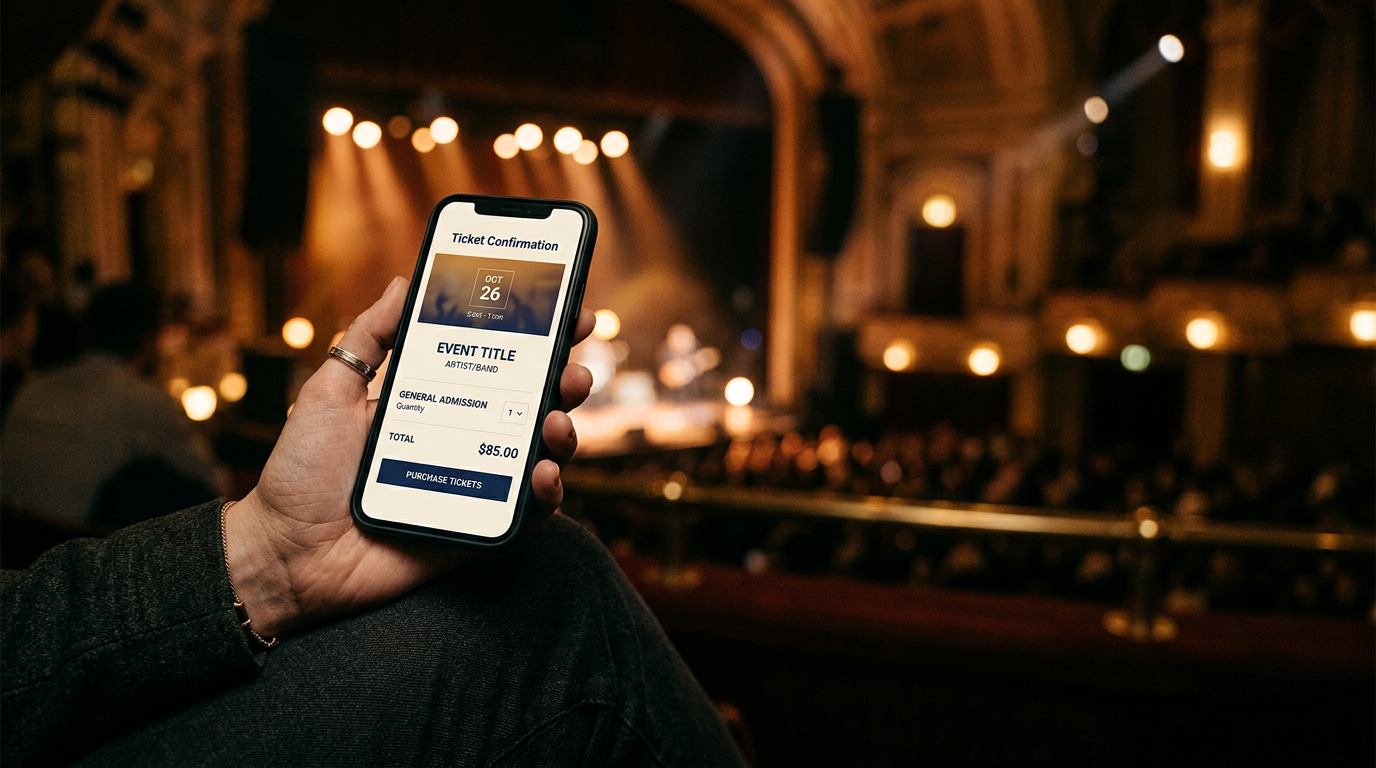
When ticket sales are lower than they should be, the first instinct is often to blame the ticketing platform and start shopping for a new one. It’s expensive, it’s disruptive, and most of the time, it’s not the real problem.
The real problem is usually much closer to the surface: the experience of buying a ticket.
Where arts organizations actually lose sales
Think about the last time you tried to buy something online and gave up. Maybe there were too many steps. Maybe the page was confusing, or slow, or asked for information you did not want to give. Maybe it bounced you to a page that did not look like the site you started on, and you suddenly were not sure it was safe. Every one of those moments is a place where a ready-to-buy customer quietly leaves.
For arts organizations, this matters even more. Your patrons are not just buying a product. They are planning a night out, often for a specific date, often for a group. If the process is frustrating, they do not just abandon the cart. They may abandon the plan.
The good news: fixing the experience almost never requires replacing your platform. It requires looking at the whole buying journey and improving it, deliberately.
A complete approach to the buying experience
A great ticket-buying experience is not an accident. It is the result of a few things working together.
Start with how people actually buy
Good experience work begins with evidence, not opinions. We study how real patrons move through your site, where they hesitate, where they backtrack, where they drop off. Analytics and user testing show you exactly where the friction is, so you are fixing real problems instead of guessing.
Design a path that feels effortless
Once you know where people get stuck, you redesign the journey to be clear and fast: fewer steps, obvious next actions, and a path that moves someone from “I want to see this show” to “I have paid” without doubt or confusion. On mobile especially, where most of your patrons are, every extra tap costs you sales.
Keep patrons in your brand
Nothing breaks trust faster than a buying flow that suddenly jumps to a generic, unbranded page. A branded purchase path keeps patrons on your site, in your look and feel, from browsing to checkout to confirmation, while your ticketing platform handles the transaction securely behind the scenes.
Recover the sales that still slip away
Even a great experience will not capture everyone. Some people get interrupted, distracted, or simply are not ready. Cart-abandonment recovery tools like CartStack bring those people back with timely, relevant reminders, so a near-miss becomes a completed sale instead of a lost one.
Put together, that is a complete approach: understand the behavior, design the journey, protect the brand experience, and recover what you would otherwise lose. No platform replacement required.
What this looks like in practice
When the Scottsdale Arts online buying experience was costing them sales, we did not replace their platform. We studied where patrons were getting stuck, rebuilt the buying journey around how people actually behave, and made the whole experience feel like Scottsdale Arts from start to finish. The result was a significant drop in cart abandonment and a measurably better experience for their patrons.
The lesson was not “buy new software.” It was “get more out of the platform you already have.” That is almost always where the real opportunity is.
Start with one question
Before you start the expensive, disruptive process of switching platforms, ask a simpler one: when was the last time you tried to buy a ticket on your own website, start to finish, on your phone?
The answer usually reveals more than any platform comparison ever will. And more often than not, the fix is closer, and far less disruptive, than you think.
If your ticket sales are not what they should be, we would love to take a look at your buying experience.