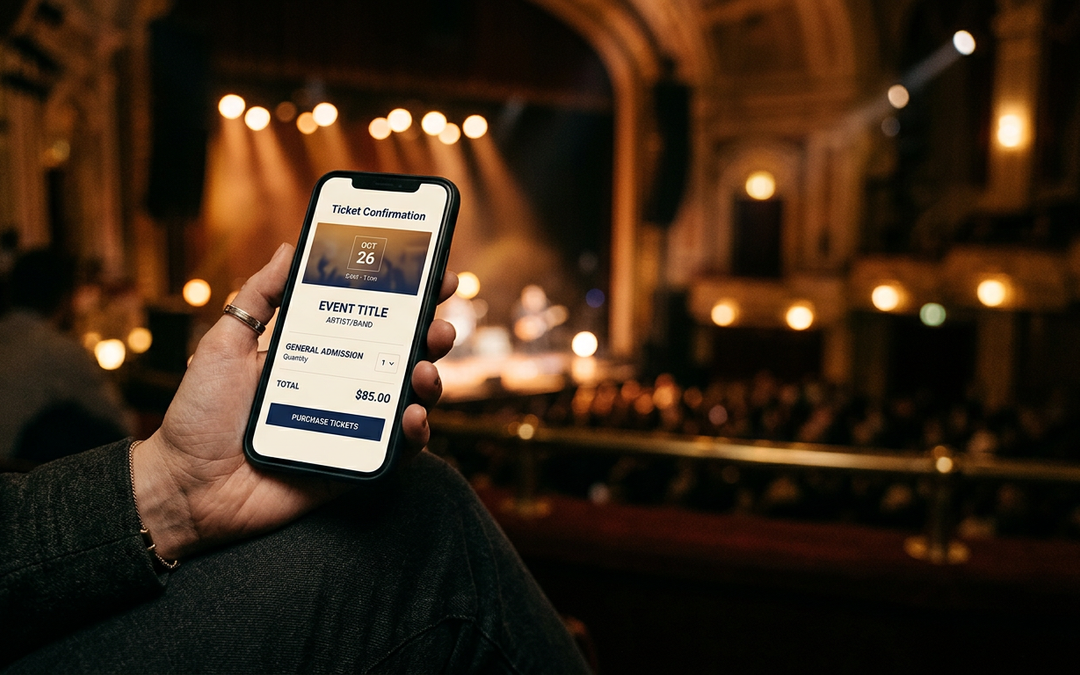

A ticket purchase starts the night out. But between deciding to buy and actually paying, there’s a lot that can go wrong: too many clicks, a confusing path, a checkout that doesn’t feel like the rest of your site. Each one is a spot where a ready buyer quietly gives up.
Customer expectations are high: easy navigation, instant confirmation, a checkout that just works. Fall short and you get abandoned carts and lost sales. Get it right and you get buyers who finish, come back, and tell people. A few things make the difference.
Why the buying experience matters so much
Buying a ticket is the beginning of a night out (a concert, a show), and your purchase path is the bridge between that anticipation and the event itself.
When the path is smooth, the buyer’s confidence builds, they trust you, and they come back. When it’s clunky, with unclear policies or a convoluted checkout, you get frustration and lost sales. The payoff for getting it right:
- Repeat buyers. A good experience brings people back.
- Fewer abandoned carts. Less friction means fewer drop-offs at checkout.
- Word of mouth. Buyers who had an easy time tell their friends.
- An edge. Patrons notice when your checkout is easier than the last one they used.
What a strong ticket-buying experience includes
Function comes first: a clear path and a checkout people trust.
1. Mobile-first design. Most buying happens on phones: in early 2024, phones accounted for 77% of visits to retail websites worldwide and about two-thirds of orders (Statista). Your purchase path has to work well on a phone:
- Layouts that adapt to any screen.
- Large, tappable buttons.
- A checkout built for small screens, with event details, seat maps, and prices clear without endless scrolling.
2. A clear path. People should never feel lost:
- Organize events logically (by genre, date, location).
- Give them smart search and filters.
- Use interactive seat maps that show availability and pricing in a click.
A simple, predictable path from homepage to checkout builds confidence.
3. Personalization. Use what you know to make it relevant:
- Recommend events based on past purchases or browsing.
- Send reminders for upcoming shows in their area.
- Offer loyal buyers exclusive perks.
When people feel understood, they engage more.
4. A fast, clear checkout. This is the make-or-break moment. 17% of US online shoppers have abandoned an order because the checkout was too long or complicated (Baymard Institute):
- Allow guest checkout (don’t force account creation).
- Offer multiple payment options (cards, Google Pay, Apple Pay).
- Show a clear order summary with all fees up front.
- Keep pages fast, especially during an on-sale.
5. Transparent communication. Trust comes from clarity:
- Show full pricing, including fees, before checkout.
- State refund and exchange policies up front.
- Confirm orders instantly by email with everything they need.
And have responsive support ready when something goes wrong.
6. Post-sale engagement. The experience doesn’t end at purchase:
- Send countdown reminders to build anticipation.
- Share venue logistics, parking, nearby dining.
- Ask for feedback after the event and invite them to the next one.
Measure what matters
Track the KPIs that tell you whether it’s working:
- Conversion rate (visitors to buyers).
- Cart abandonment at checkout.
- Repeat-purchase rate.
- Customer satisfaction (post-event surveys).
- Average order value from personalization and upsells.
Check these after every on-sale and fix the worst drop-off first.
Where to start
Pick the step where your buyers drop off most and fix that first. Most of this can be done on the ticketing platform you already have, and our four-step approach shows how we work through it. For Scottsdale Arts, a rebuilt purchase path on the AudienceView platform they already had cut abandoned carts by 88%.
That’s the work we do: a better ticket-buying experience, built on the platform you already run. Let’s talk →